Gingham Garden Printable Journal Paper: A Creative Toolkit
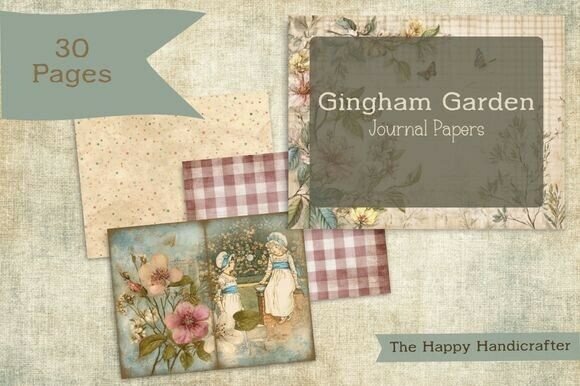
There’s a particular kind of creative satisfaction that comes from working with materials that feel both beautiful and purposeful. The Gingham Garden – Printable Journal Paper collection understands this instinct. It isn’t just a set of pretty patterns; it’s a thoughtfully curated toolkit designed to bring a cohesive, story-rich aesthetic to your tangible projects. Imagine the soft, sun-dappled feel of a cottage garden translated onto paper—that’s the essence here. With 30 coordinated pages featuring watercolor florals, delicate illustrations, and classic gingham in a palette of sage green, dusty rose, buttercream, and soft blue, it offers a versatile foundation for anyone who works with paper.
More Than Just Pretty Pages: Understanding the Collection's Design DNA
At its core, this printable paper set functions as a premium font for your physical projects, but for texture, pattern, and mood instead of letterforms. Its visual personality is one of gentle nostalgia and fresh simplicity. The watercolor elements have a hand-painted, artisanal quality, while the gingham patterns provide a structured, familiar backbone. This balance is key—it avoids feeling overly saccharine or childish, striking a tone that’s sophisticated enough for editorial design mockups or brand identity mood boards, yet warm and inviting for personal journaling.
The real strength lies in its versatility. You’ll find decorative papers perfect for layering as backgrounds or focal points, lightly detailed writing pages that offer subtle guidance without overpowering your words, and softly textured backing designs ideal for creating depth. This mix allows you to build a complete visual narrative. For a crafter, it means no more hunting for coordinating elements. For a designer, it’s a ready-made design asset kit for creating tangible prototypes or client presentations that evoke a specific, garden-inspired aesthetic.
Practical Applications: From Personal Journals to Commercial Projects
So, where does Gingham Garden – Printable Journal Paper truly shine? Its applications span the personal and the professional with surprising fluidity.
For junk journaling and scrapbooking, it’s a dream. The pages are designed to layer beautifully, allowing you to build complex, textured layouts. Imagine using a gingham pattern as a base, topped with a floral page cut into a pocket or frame, and finished with a writing page for journaling your thoughts. The cohesive color story ensures everything feels intentionally curated, not chaotic.
For handmade journals and planners, this collection solves a common problem: creating a professional, cohesive interior. Using the writing pages for daily entries and the decorative pages for chapter dividers or monthly covers elevates a simple notebook into a bespoke object. The soft hues are easy on the eyes, making them practical for readability during extended use—a crucial consideration in editorial design.
Entrepreneurs and small business owners can leverage this kit for packaging design elements. Think of tissue paper inserts, thank-you card backgrounds, or product tag accents that communicate a brand story of artisanal quality and gentle care. The vintage-inspired style can help a brand feel established and trustworthy, influencing brand perception and audience engagement through tactile experience.
Digital creators aren’t left out. These pages are superb for creating social media graphics with a handmade feel. Photograph a flat lay using the printed pages as a background for product shots, or use them as overlays in digital planners. The pattern and texture add depth and interest that solid color blocks often lack.
Guidance for Seamless Integration into Your Workflow
Adopting any new design asset requires a bit of strategy. Here’s how to make the most of the Gingham Garden collection:
Evaluate Project Fit: This toolkit has a distinct personality—soft, nostalgic, and organic. It’s a perfect fit for projects related to gardening, weddings, baby showers, boutique retail, stationery brands, or any venture wanting to convey warmth and authenticity. It might be less suitable for ultra-modern, tech-forward, or high-energy brand identities. Always match the asset’s voice to your project’s core message.
Test Layering and Pairing: Don’t just use one page in isolation. The magic happens when you combine them. Print a few sheets and physically experiment with layering a floral over a gingham, or using a writing page as an insert. For digital work, play with opacity and blending modes. Consider how these patterns might pair with other font pairings in your project. A clean, modern sans serif font for headlines can create a beautiful contrast with the soft, vintage patterns, while a complementary script font can enhance the handwritten feel.
Mind the Details: Pay attention to the included styles. The writing pages likely have lines or a subtle grid—use these for their intended purpose to maintain visual hierarchy and readability. The decorative pages are for accents. Using a highly patterned page for long blocks of text would be overwhelming. This is where understanding the collection’s components prevents design missteps.
Consider Commercial Licensing: If you plan to use these pages in products for sale—like handmade journals, packaged goods, or digital templates—ensure you review the licensing. Most high-quality printable kits, like a commercial font, come with specific terms. Using them within your business’s internal documents or client presentations is typically fine, but selling the printed pages themselves or incorporating them into a logo as a primary element requires checking the license.
Ultimately, the Gingham Garden – Printable Journal Paper is more than a download; it’s a creative catalyst. It provides the visual cohesion and aesthetic depth that can transform a simple project into a resonant, story-driven piece. By understanding its components and applying them thoughtfully, you can harness its quiet charm to create work that feels both personal and polished. It’s an invitation to slow down and let the tactile joy of paper and pattern guide your creative process.